
Housing as Infrastructure
Not an asset class

Housing is not just ‘real estate'.’
It’s not ‘multifamily.’
It’s not a ‘residential project.’
Housing is Shelter. Stability. Proximity.
It’s a proxy for cost. In fact, I like to think of it as the base layer for human productivity in the developed world.
This month, we’re talking about Housing as Infrastructure. My first attempt at this piece became a manifesto not a essay - so I ditched it. I have found myself deeply passionate about this subject. So much so, that I’m committed to personally and professionally. As the father of two young adult children and aging parents - both sides of life require something different in terms of housing. They deserve #StableLiving.
I hope you enjoy this one, and as always, I invite you to join us on this journey.
Onward and Upward but always Forward,
Chris
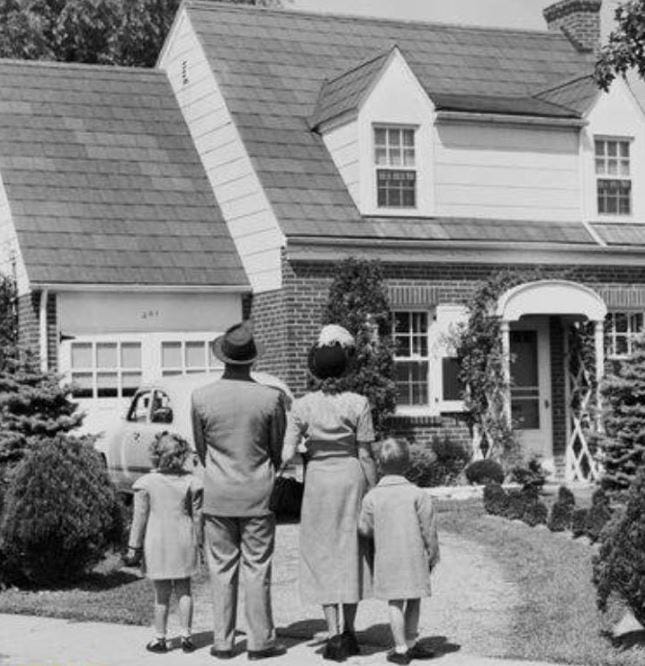
Housing is not just real estate.
It is not multifamily.
It is not a residential project.
At its most basic level, housing is shelter. It is stability. It is proximity to work, to school, to community. It is also a proxy for cost. In the developed world, housing functions as the base layer for human productivity. When housing works, everything built on top of it works more smoothly. When it destabilizes, the ripple effects are immediate.
I often say that a Pretty Good House is pretty good enough. It does not need to be extravagant. It does not need to be optimized for status. It needs to be durable, efficient, and predictable. Good bones. Reasonable operating costs. A place to build a future from.
And yet, over the last few decades, we have turned housing into something else entirely. It has become the central pillar of global housing capital.
The U.S. market alone is projected to account for 52 percent, roughly $2.4 trillion, of the $4.6 trillion in global luxury real estate wealth expected to change hands over the next decade. JP Morgan recently valued the U.S. mortgage market at approximately $14.5 trillion. These are not small numbers orbiting the edge of the economy. They are foundational to it.
And yet, despite the scale of capital, we are told there has never been a greater shortage of inventory.
That contradiction deserves attention.
Because this is not simply a scarcity issue. It is an economics issue. And something in the economics is broken.
Over time, housing has transitioned from a consumer good into a sophisticated financial instrument. For individuals, it has become the primary vehicle for wealth accumulation. For institutions, it has become a yield-producing asset class.
Institutional investors accounted for nearly 20 percent of U.S. home purchases in 2024. Some projections suggest they could control 40 percent of single-family rentals by 2030. Among high-net-worth individuals, real estate holdings grew nearly 30 percent between 2020 and 2026, reinforcing its position as a long-term wealth anchor. Even in recent months, U.S. real estate has outperformed major asset classes.
None of this is accidental.
Capital flows toward performance. Real estate has performed. So capital has concentrated.
But when housing became a capital asset, its role quietly shifted. It no longer exists primarily to stabilize families. It exists to stabilize portfolios.
When capital optimizes for yield, the system begins pricing housing according to global liquidity rather than local wages. A nurse in Asheville, NC is not competing with another nurse. She is competing with institutional capital. A teacher in Atlanta is not negotiating with a local landlord alone. He is negotiating within a national yield environment.
This is how the “shortage” emerges.
Not as a lack of square footage, but as a misalignment between what housing costs and what communities can sustain.
If we slow down and examine the shortage more carefully, it becomes clearer what is actually scarce.
There is a shortage of attainable housing at workforce wage levels.
There is a shortage of walkable development in rural towns.
There is a shortage of missing-middle ownership for young singles and aging residents.
There is a shortage of durable construction that lowers long-term operating costs.
Most of all, there is a shortage of alignment.
Alignment between wages and cost.
Alignment between durability and financing.
Alignment between operating cost and underwriting.
Alignment between community stability and investor expectations.
There is no shortage of capital.
There is no shortage of square footage.
There is no shortage of financial engineering.
The system is not starved of money. It is structured around the wrong objective function.
Infrastructure is designed to reduce volatility. Water systems smooth risk. Power grids distribute load. Bridges are engineered to absorb stress over decades.
Asset classes, by contrast, are designed to price volatility. They respond to liquidity cycles. They amplify momentum. They reward arbitrage.
Housing is currently trying to be both.
When the base layer of human productivity begins to behave like a traded instrument, volatility migrates downward into daily life. Savings rates fall. Risk tolerance declines. Commutes lengthen. Civic participation thins. Entrepreneurship stalls because cost of living absorbs margin.
We have tethered shelter to global capital markets and then expressed surprise at the instability.
This is not a moral critique. It is a structural observation. The system is functioning exactly as designed. Capital seeks yield. Yield concentrates. Concentration increases pricing power. Pricing power increases volatility.
The loop closes.
The question is whether housing should sit inside that loop. That’s why I’m designing the scaffolding for the fund that supports housing as infrastructure - critical infrastructure.
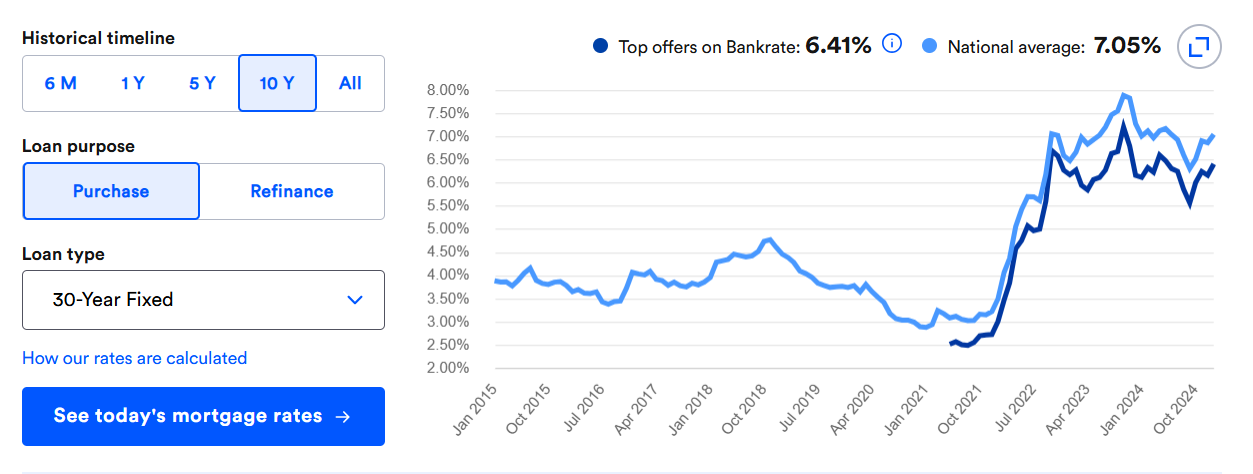
If we begin instead with the premise that housing is infrastructure, the design questions change.
We ask about lifecycle cost, not just purchase price.
We ask about energy resilience and insurance resilience.
We ask about durability over decades, not quarterly returns.
We ask how housing stabilizes a workforce, not how it performs against commodities.
This does not eliminate capital. It reframes it.
Infrastructure capital is patient. It accepts moderate returns in exchange for durability and predictability. It values stability over velocity. It is engineered for long horizons.
Housing, if treated as infrastructure, would be financed and designed accordingly.
And that shift would change everything downstream.
Because a Pretty Good House can stabilize a life. But only if the system around it is aligned with that purpose.
The real shortage is not units.
It is alignment.
And alignment is an economic design problem, not a supply problem.
If housing is infrastructure, then the infrastructure embedded within it deserves more attention.
Not the finishes. Not the square footage. Not the cost-per-foot.
Energy. Insurance. Climate exposure. Maintenance load.
For most of the past half century, housing underwriting has centered on purchase price and debt service. Income relative to mortgage. Loan-to-value ratios. Interest rate sensitivity. Appreciation curves.
The physical system of the home itself was largely assumed to be stable. Utilities were considered background inputs. Insurance was a manageable expense. Maintenance was episodic.
That assumption is softening.
Energy volatility is no longer theoretical. Regional grid strain, extreme temperature swings, and aging transmission networks are introducing variability into what was once a predictable cost layer. Insurance pricing is undergoing structural repricing across wildfire corridors, coastal regions, and flood-prone basins. Carriers withdraw. Premiums adjust. Deductibles shift. In some areas, coverage narrows.
These are not marginal line items. They are increasingly central to total housing cost.
And total housing cost is what ultimately determines stability.
When energy costs rise unpredictably, monthly housing expense expands beyond the mortgage. When insurance reprices sharply, fixed housing budgets lose their predictability. When maintenance cycles compress because of climate stress, reserves thin.
None of this appears immediately in appreciation charts.
But it shows up in household balance sheets.
And eventually, household balance sheets aggregate upward.
It’s time to rebalance the balance sheets.
For decades, capital markets shaped housing outcomes. Today, the physical performance of housing is beginning to shape capital outcomes. The relationship is becoming reciprocal.
A structure built without attention to enclosure performance in a region of rising heat exposure carries a different thirty-year cost profile than one built for thermal efficiency. A development dependent on centralized infrastructure in a water-stressed region carries a different long-term risk posture than one designed with redundancy. A portfolio concentrated in high-insurance-volatility geographies carries a different stability profile than one diversified by climate exposure.
These variables are slow moving.
And because they accumulate slowly, they can remain outside traditional underwriting models longer than expected.
Housing, viewed as an asset class, emphasizes price movement and yield. Housing, viewed as infrastructure, emphasizes performance over time.
Performance in this context means:
⚡ Energy demand relative to climate conditions.
📈 Insurance durability relative to exposure.
🔨Maintenance predictability relative to material choice.
🚲Transportation cost relative to location design.
These are not philosophical distinctions. They are cost structures.
When the base layer of human productivity is exposed to increasing physical volatility, the financial layer eventually absorbs it. The timing may vary. The path may not be linear. But the relationship is structural.
This is not a critique of capital. It is an acknowledgment of complexity.
The housing system now operates at the intersection of global liquidity and local physics.
Liquidity moves quickly.
Physics does not.
As those two forces converge, the conversation around housing inevitably broadens.
Not away from finance….but deeper into it.
Because the stability of housing returns over long horizons increasingly depends on variables that sit below the financial model.
Energy infrastructure.
Insurance systems.
Climate durability.
Material science.
Urban design.
Housing has always been physical infrastructure. For a period of time, financial abstraction obscured that reality.
The abstraction is thinning.
And as it does, the distinction between housing as an asset and housing as infrastructure becomes less rhetorical and more practical.
Not because one is right and the other is wrong.
But because the operating environment is changing.
To me, housing now sits at a quiet, mid-western intersection surrounded by corn fields and silos.
For years, it was possible to separate the financial abstraction from the physical structure. A home could be modeled, securitized, traded, refinanced, and appraised without much attention to the systems quietly operating beneath it. Energy was assumed. Insurance was available. Maintenance was episodic. The structure itself was background…and we had income to support it.
That separation is becoming harder to maintain.
Energy systems are aging at the same time that demand is rising. Insurance markets are adjusting to climate exposure in ways that feel abrupt to homeowners but inevitable to actuaries. Maintenance cycles are compressing in regions experiencing heat, moisture, or wildfire stress. None of these forces announce themselves dramatically in quarterly returns. They accumulate slowly, almost invisibly, inside operating budgets.
Over time, those operating budgets determine stability.
An now, wage is trailing.
For decades, capital markets shaped housing outcomes. Now housing’s physical performance is beginning to shape capital outcomes in return. The relationship is no longer one-directional. The structure matters again.
This does not mean housing stops being an asset. It does not mean appreciation disappears. It does not mean capital retreats.
It means the foundation reasserts itself, and new players fund the game.
Housing has always been infrastructure. It was simply easier, for a time, to treat it primarily as a financial instrument. As volatility concentrates in energy systems, insurance markets, and climate exposure, the abstraction thins. What is physical becomes financially relevant again.
The shortage we describe so often may not be a shortage of units at all. It may be a shortage of alignment between the financial models we use and the physical systems those models depend upon.
When housing performs well physically, it stabilizes households. When households stabilize, economies compound quietly. That compounding rarely makes headlines. It rarely leads monthly return tables. But it is what allows productivity to build over generations.
If housing is the base layer of human productivity, then its durability, predictability, and resilience matter more than its quarterly performance.
That is not a moral claim. It is a structural one.
And as the operating environment changes, the distinction between housing as an asset class and housing as infrastructure becomes less rhetorical and more practical.
The structure remains.
The systems beneath it are shifting.
Finance will adjust, as it always does.
The question is whether we begin underwriting the full picture before the picture forces itself into the model.
I’m Chris Moeller and I help build #ResilientCommunities. Ask me how. #StableLiving #PathwayCommunities #TinyGiants