
Tensegrity

A design principle that incorporates concept and physics into one.
Some parts are being pulled.
Some parts are being pushed.
And the whole system holds its shape because those forces stay in balance.
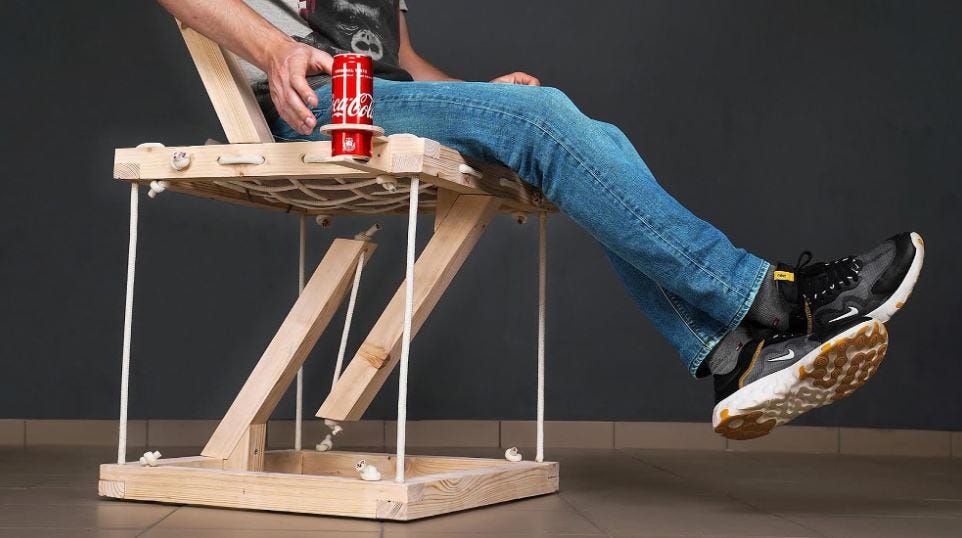
The word, which blends tensional and integrity, was derived by the acclaimed architect, scientist, and thinker R. Buckminster Fuller. (Come visit with me at Fuller Futures on Earth Day in Carbondale)
In architecture, it creates lightweight but stable structures.
In the human body, people use it to describe how muscles, bones, and connective tissue work as a whole system.
In systems thinking, it’s a great metaphor for how resilience comes from balance and interdependence, not from one ridged, overbuilt part (or overused design.) That’s where I want to poke around a bit.
It feels very aligned with the way I think about regenerative systems, housing, and communities. Not a pile of isolated parts, but a living structure held together by balanced forces.
I grew up in a small town in Connecticut. Everyone knew everyone. They knew your name and your order at the deli. There was always a youth sports connection - a coach or someone who volunteered and knew the family. Honks from passer’s by if you were out in the yard. That was just the way it was.
Looking back, that wasn’t nostalgia.
That was tensegrity. Not physical, but social.
A network of small, consistent pulls and pushes. Recognition. Accountability. Belonging. Presence.
There wasn’t a single element that carried that load. But together, it held shape.
Somewhere along the way, we started replacing that with scale.
Times have changed and now I live in a large, urban setting in the American South. Last time I checked, we were receiving something like 150 new people per day.
Naturally, that translates to more units. More efficiency. More optimization. More for the sake of more.
But that means less connection and some big losses along the way.
We lost our corner store. We lost our billiards hall. We lost our chicken joint. Cold beer turned into craft cocktails. Wings turned into charcuterie.
We built for load, and we stopped building for balance.
If we want resilient communities, we don’t need to keep adding weight to the system. We need to rethink how the system holds itself together. My goal isn’t to build something bigger or more complex, it’s to create something more balanced. A place where the load is shared, where no single part is carrying too much, and where relationship between those parts really matter.
That starts at a very human scale. The spaces we design should make it easier for people to know each other, not avoid each other. The built environment has a quiet but powerful influence on behavior, and right now much of it is optimized for separation and efficiency. Look no further than the modern office. If we want something different, we have to design for interaction, for familiarity, for the small moments that build trust over time.
It’s not just about the physical space either. The same idea applies to how we structure finances, energy, and access. When those systems are aligned, they reduce pressure instead of adding to it. They give people room to participate, to stabilize, and eventually to move forward. When they’re misaligned, they isolate and strain, no matter how well the buildings are designed.
That’s the shift I keep coming back to. Moving away from the mindset of pure scale and toward one of balance. From isolated parts to integrated systems. From building for load to building for relationship.
Seems like to me, we need to put some more tension in the system...and take some weight off of it.
#TinyGiants #StableLiving PathwayCommunities